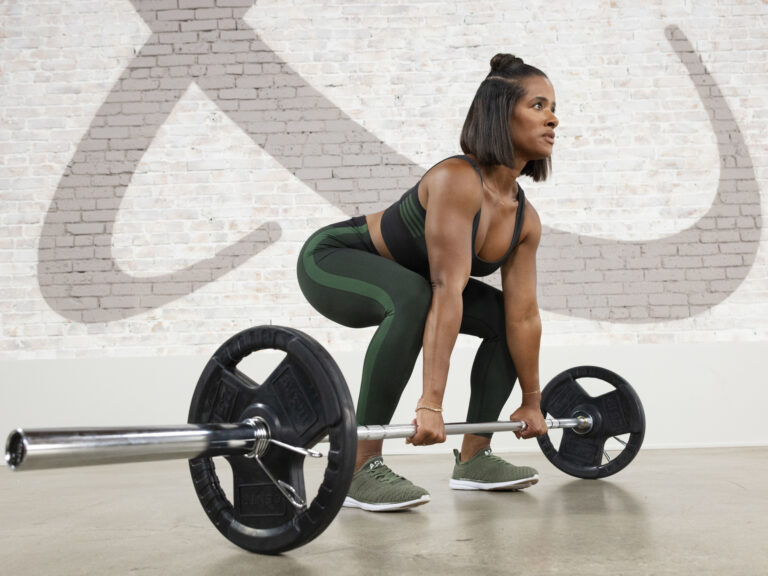
Strength training is having a moment — and if you’ve been curious about picking up a barbell (or some dumbbells, or even just starting with your own bodyweight), I’m glad you’re here.
Because here’s what I know after years of training women: most of you want to do this. You want to feel strong. You want muscle that actually does something. You want to walk up a flight of stairs and feel like a capable human being.
What gets in the way isn’t willpower. It’s confusion. The internet is absolutely stuffed with conflicting advice, and every “expert” is convinced their method is the only method. So let’s cut through that noise and talk about what you really need to know to get started with strength training — especially if you’re a woman over 40.
I don’t just mean for aesthetics (though feeling good in your body is a completely valid goal). I mean for the basic business of being alive.
Your body has different types of muscle fibers. Some handle slow, endurance activities — like walking. Others handle powerful, loaded movements — like squats and deadlifts. Here’s the thing: you can only activate those stronger, more powerful fibers by challenging them with real resistance. Slow, easy movement doesn’t reach them.
And if you don’t use them? You lose them. There’s actually a term for this — muscle power loss — and it’s no longer just something that happens to older adults. It’s increasingly common in women in their 30s, 40s, and 50s who’ve spent years doing cardio without ever picking up anything heavier than a yoga block.
Lifting weights isn’t just about how you look. It’s about what your body can do — and for how long. That’s worth taking seriously.
What lifting heavier weights actually does for most women? You get stronger. You get more defined. You lose fat more effectively than you would with cardio alone. You feel more capable in your day-to-day life. Your posture improves. Your metabolism gets a boost.
The women you see with very large, dramatically muscular physiques have worked incredibly hard — often for years, with very specific nutrition strategies — to achieve that. It doesn’t happen by accident, and it won’t happen to you from a few sessions a week of sensible strength training.
A knowledgeable coach sees the things you can’t see in a mirror — small form issues that matter a lot over time. A good coach isn’t just there to count reps and cheer. They’re designing a program around your body, your history, and your goals.
Good technique comes first. Always. But there’s a flip side: staying with weights that are way too easy forever doesn’t serve you either. You need to actually challenge your muscles to get stronger. Challenge and form aren’t opposites — both matter.
Program-hopping is one of the most common mistakes beginners make. You try one thing for a week, switch to something else, try a trending workout, and repeat. Strength takes time. A solid, consistent program — even a simple one — will get you further than chasing the newest method.
Your body adapts. That’s the whole point. If you do the exact same workout with the same weights forever, you’ll plateau. A good program builds in gradual increases so your body keeps being challenged — and keeps getting stronger.
Bodyweight squats count. Light dumbbells count. A beginner barbell program absolutely counts. What you’re building in those early weeks isn’t just muscle — it’s a habit, a skill, and a relationship with your own body that will pay off for years.
You’re not training for a competition (unless you want to be — which, honestly, go for it). You’re training to feel strong, capable, and good in your body. That’s a completely worthy goal. And it doesn’t require a perfect start.
Three workouts a week. A program you’ll actually stick to. A little patience with yourself as you learn new movements. That’s the formula — and it works every time.
If you’ve been on the fence about starting, consider this your sign. Your future self — the one who can carry all the groceries in one trip, who feels strong in her body at 50, 60, and beyond — is rooting for you to begin.
Not sure where to start? That’s exactly what I’m here for. Contact me about working together.